Eggplant Varieties:
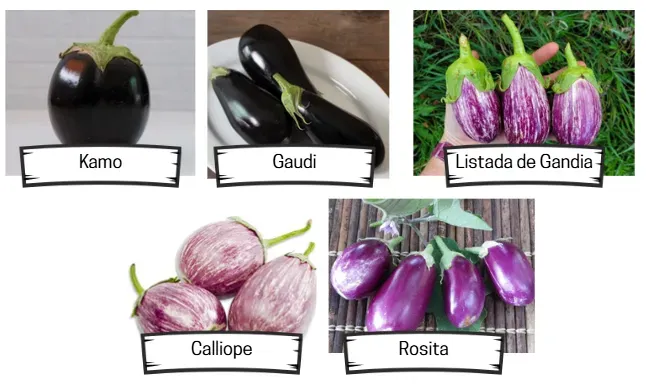
Kamo Eggplant
Nutritional Value
Kamo eggplants are a source of fiber to regulate the digestive tract, vitamin C to strengthen the immune system, potassium to balance fluid levels within the body, and manganese to produce connective tissues. The eggplants also contain vitamin K to assist in faster wound healing, phosphorus to protect bones, folic acid to develop red blood cells, and other amounts of vitamin B6, copper, manganese, and niacin.
Applications
Kamo eggplants have a firm, dense consistency and mild, sweet flavoring well suited for cooked preparations. The eggplants are popularly grilled, boiled, fried, roasted, and baked, and the flesh is traditionally scored for even cooking. Kamo eggplants are highly valued for their flavor and texture and are incorporated into dishes as the main ingredient. The most common dish served throughout Japan is miso dengaku, where Kamo eggplants are coated in miso paste and fried or baked to develop a savory-sweet taste. The eggplant’s dense flesh will not wilt with cooking, and the skin can be left intact as it becomes tender with heat. Kamo eggplants are a gourmet and revered ingredient throughout Japan prepared simply to honor the local vegetable's authentic flavor. In Kyoto, high-end restaurants allow guests to choose their Kamo eggplant before preparing their meal. The eggplants are presented to guests in a basket with labels describing the region of Japan it is grown in, and each guest hand selects which Kamo eggplant they want according to the area. In addition to coating the eggplant in miso, Kamo eggplants are sometimes stuffed and baked, fried into tempura, steamed, boiled in soups, or tossed into stir-fries. Kamo eggplants pair well with aromatics such as ginger, scallions, and garlic, tomatoes, snow peas, carrots, radish, zucchini, mushrooms, bamboo shoots, yuzu, meats such as duck, pork, and fish, sesame seeds, and flavorings including miso and soy. Whole, unwashed Kamo eggplants should be used immediately for the best quality and flavor. The eggplants will also keep 2 to 3 days when stored in a cool and dry place. Experts believe the optimum storage for the eggplant is between 46 to 54 degrees Fahrenheit, and any temperature below 41 degrees Fahrenheit will damage the fragile variety.
Calliope Eggplant
What is Calliope eggplant? The plant produces a truly egg-shaped fruit that has decorative splashes of color. It is almost too pretty to eat, but reportedly has a nice, lightly sweet flavor perfect for many types of cuisine. Calliope is a beautiful, oval, Indian eggplant. Suitable for baby (2″ long x 1 1/2″ diameter) or mature (3-4″ long x 2 1/4-2 3/4″ diameter) harvest. High yielding, even in the North. The plants and calyxes are spineless, unlike many varieties of this type. Green calyx.
Among the Calliope eggplant uses are soups, stews, egg dishes, roasted and pureed, fried, and even grilled.
Gaudi Eggplant
Gaudi Organic (F1) Eggplant
Cookie-cutter uniformity.
Prolific yielder of glossy fruits with attractive teardrop shape.
Rosita Eggplant
Also called 'Rosa Bianca' eggplant, the 'Rosita', is a unique and attractive heirloom variety of eggplant. It is notable for its rounded shape and striking appearance, characterized by its smooth, creamy skin that exhibits shades of lavender and white. Unlike the more common purple eggplants, the Rosa Bianca variety is known for its mild and creamy flavor, with less bitterness than other types. This makes it a popular choice for a variety of culinary uses.The flesh of the Rosa Bianca eggplant is tender and creamy when cooked, making it excellent for baking, grilling, or frying.
It is often used in traditional Italian cooking and is well-suited for dishes where its subtle flavor and creamy texture can shine, such as in ratatouille, eggplant parmesan, or simply sliced and grilled. Gardeners appreciate this variety for its ornamental and culinary value, as well as its relatively easy growth habits. Rosa Bianca eggplants typically perform well in warm climates and require similar growing conditions to other eggplant varieties. Delicious Puerto Rican heirloom eggplant.
Listada de Gandia Eggplant
Listada de Gandia is a treasure. This prized variety bears sweet, tender, thin-skinned, stunning eggplant. It likely originated in Spain (its name translates as “Grown in Spain”), where it is still revered today. The small 14" plants produce heavy yields of high-quality, 8" oval white fruits with purple stripes and mild white flesh. The variety thrives in very hot weather.
This variety works for: roasting, baking, grilling or stewing.
To help the flesh of eggplant fruits hold up in dishes, roast it slightly before adding any sauces.
Some varieties of heirloom eggplant benefit from slicing the fruit and then salting, rinsing, and draining the water that emerges from the flesh. It is thought to remove bitter flavors and reduce the amount of oil or fat taken up by the fruit when it is cooked. Eggplant is sometimes used as a meat substitute because of its texture and rich, complex flavor. It is very popular in Indian dishes such as Baingan bharta and in French dishes like ratatouille.
Cucumber Varieties
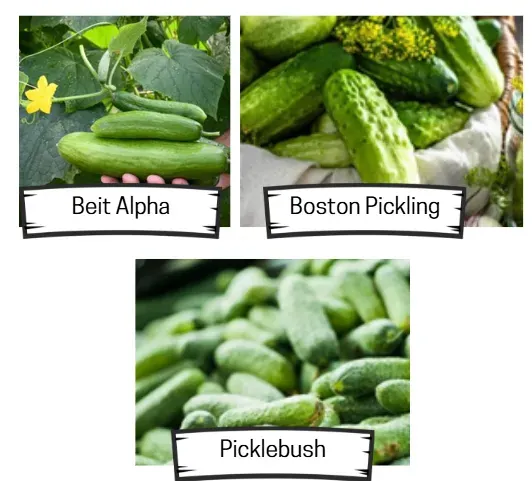
Beit Alpha Cucumber
Beit Alpha is famous the world over for its mild, sweet flavor, high yield, and consistency. In the early 1930s, plant breeder Hanka Lazerson at the Beit Alpha kibbutz in northern Israel set about improving the Damascus cucumber, a delicious but unpredictable landrace variety. The result was Beit Alpha, and it is everything a cucumber should be! Immigrants from the Middle East took Beit Alpha seeds with them as they settled around the world, and thanks to its desirable genetics, Beit Alpha has been used to develop hundreds of both hybrid and open-pollinated varieties. The plants of our Beit Alpha contain both male and female flowers, and the burpless fruit is thin skinned with relatively few seeds. Enjoy this slice of botanical history in your salads!
Boston Pickling
Boston Pickling Cucumber is a time-tested American Heirloom that dates to the late 1800s. As early as 1883 Joseph Breck & Son, a popular seed company in Boston wrote a review of this cultivar.
“Extensively grown by the market gardeners in the vicinity of Boston. It is very productive and of superior color and quality.” 250 years later it is still getting great reviews by American Gardeners, in fact I was unable to find a single negative review on any contemporary sites.
This only bore out my own experience with this cuke – it is excellent for pickling, but not limited to pickles as it works well as a fresh cucumber also.
Picklebush
The picklebush cucumber looks very similar to many other cucumber varieties with its deep green coloring and knotty bumps and ridges. Its flavor is mild and slightly sweet, a refreshing taste you expect in a cucumber.
These cucumbers only grow to about 4-5 inches in length, making them an excellent choice for pickling! They are shorter and thicker than their slicing cucumber cousins.
Peppers
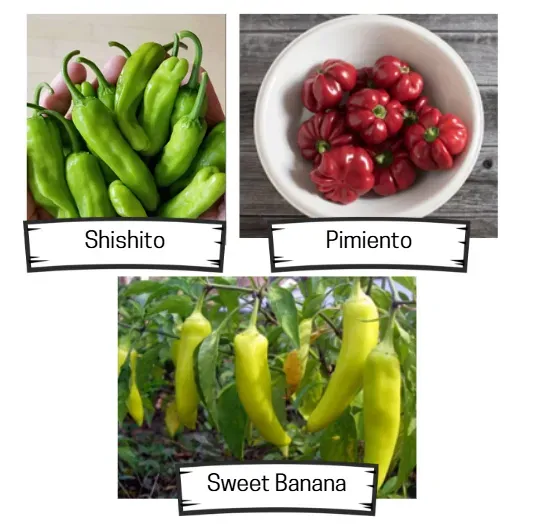
Shishito Peppers
Scoville Heat Units: 50-200 SHU
Capsicum Annuum
The shishito pepper is a popular appetizer pepper that is interesting for being mostly a mild chili pepper, but every now and then a particular pod will pack some heat. The heat isn't overwhelming, but it can be surprising, which adds allure and popularity to this particular pepper.
It is a vibrant green pepper that eventually matures to red but is mostly eaten green. It is similar to the pimiento de padron pepper.
Sweet Banana Pepper
Banana peppers, also known as yellow wax peppers, are a type of pepper that belongs to the Capsicum annuum species. They are named for their elongated shape and bright yellow color that resembles a banana, although the color can change to red or orange as they mature. Banana peppers are typically mild, ranging from 0 to 500 Scoville Heat Units, making them less spicy than jalapeno peppers.
These peppers are versatile and can be used in a variety of culinary applications. They are commonly pickled and used as a topping on sandwiches, salads, and pizzas. Banana peppers can also be stuffed, grilled, or used in salsas and relishes. They add a
burst of tangy and slightly sweet flavor to dishes, making them a favorite ingredient to enhance many dishes.
Pimento Pepper
The ‘Round of Hungary’ pepper is an heirloom pepper variety, a specialty pepper grown for its meaty, succulent and firm flesh with a bitter-sweet taste.